X Ray Diffractometers Complete Guide to Material Analysis and Crystal Structure Research
X Ray Diffractometers are scientific instruments used to study the internal structure of materials. These instruments help researchers understand how atoms are arranged within solids by examining the way X-rays interact with crystalline substances. The technique behind these instruments is known as X-ray diffraction (XRD), a widely used analytical method in science, engineering, and industry.
The development of X-ray diffraction began in the early twentieth century when scientists discovered that X-rays could be scattered by crystal structures. This discovery provided a way to examine materials at the atomic level without destroying the sample. Since then, X Ray Diffractometers have become essential tools in laboratories, research institutions, manufacturing facilities, and educational environments.
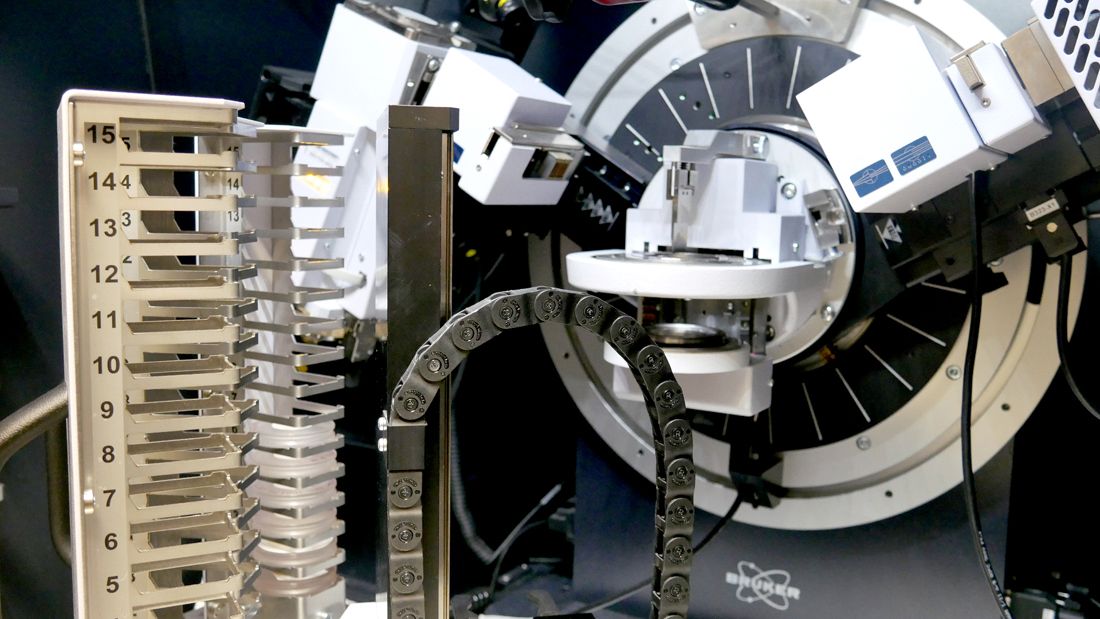
Many materials, including metals, ceramics, minerals, pharmaceuticals, and semiconductors, possess crystalline structures. Understanding these structures helps researchers identify materials, evaluate quality, and study physical properties. X Ray Diffractometers provide information that may not be visible through ordinary observation methods.
Today, advances in computing, automation, and detector technology have made these instruments more efficient and accessible for various scientific applications.
How X Ray Diffractometers Work
X Ray Diffractometers direct X-rays toward a sample. As the X-rays interact with the crystal lattice inside the material, they are scattered in specific patterns.
The instrument records these diffraction patterns and converts them into data that researchers can analyze. The resulting information helps determine crystal structure, phase composition, and material characteristics.
Main Components of X Ray Diffractometers
| Component | Function |
|---|---|
| X-Ray Source | Produces X-rays for analysis |
| Sample Holder | Positions the material sample |
| Detector | Measures diffracted X-rays |
| Goniometer | Controls angular movement |
| Computer Software | Processes and analyzes data |
| Safety Enclosure | Helps protect users from radiation exposure |
Each component contributes to the overall measurement process.
Importance
Supporting Scientific Research
X Ray Diffractometers play a significant role in scientific research. They help researchers investigate the atomic structure of materials and understand how those structures influence physical and chemical properties.
This information supports discoveries across multiple scientific fields.
Material Identification
One important application of X-ray diffraction is identifying unknown materials. Different crystalline substances produce unique diffraction patterns.
Researchers use these patterns to distinguish among:
- Minerals
- Metals
- Ceramics
- Chemical compounds
- Pharmaceutical ingredients
Accurate identification helps improve research and manufacturing processes.
Quality Control Applications
Manufacturing industries often use X Ray Diffractometers to verify material consistency. Small structural changes can affect product performance, durability, and reliability.
Quality control applications include:
- Raw material verification
- Product consistency monitoring
- Process validation
- Structural analysis
- Defect investigation
These activities help maintain manufacturing standards.
Advancing Medical and Pharmaceutical Research
Pharmaceutical researchers use X-ray diffraction to study drug compounds and crystalline forms. Understanding crystal structures helps researchers examine stability, formulation behavior, and material characteristics.
This information contributes to medical research and pharmaceutical development.
Supporting Technological Innovation
Modern technologies often depend on advanced materials. Semiconductors, batteries, electronics, and renewable energy systems rely on materials with carefully controlled structures.
X Ray Diffractometers help researchers understand and improve these materials.
Understanding Material Analysis
Crystal Structure Determination
A crystal structure describes the arrangement of atoms within a material. X-ray diffraction provides information about these arrangements by analyzing diffraction patterns.
Researchers can determine:
- Atomic positions
- Lattice structures
- Crystal symmetry
- Unit cell dimensions
- Structural relationships
These insights support material characterization.
Phase Identification
Many materials contain multiple phases. A phase refers to a distinct structural form within a material.
Phase analysis helps researchers understand:
- Material composition
- Processing effects
- Structural transformations
- Manufacturing outcomes
This capability is valuable across numerous industries.
Residual Stress Analysis
Residual stress refers to internal stresses that remain within a material after manufacturing or processing.
X Ray Diffractometers can assist in evaluating:
- Mechanical stress
- Structural deformation
- Material performance
- Fatigue resistance
These analyses support engineering and product development activities.
Thin Film Characterization
Thin films are used in electronics, coatings, solar cells, and display technologies.
X-ray diffraction helps researchers examine:
- Film thickness
- Crystal orientation
- Structural quality
- Material composition
These measurements support modern technology development.
Nanomaterial Research
Nanomaterials contain structures measured in nanometers. Their properties often differ significantly from larger materials.
X Ray Diffractometers assist researchers in studying:
- Nanoparticle size
- Crystal quality
- Structural changes
- Material behavior
Nanotechnology research continues expanding across many scientific disciplines.
Recent Updates
Improved Detector Technology
Between 2024 and 2026, detector technology continued advancing within the X-ray diffraction field. New detector designs improved measurement speed and sensitivity.
These developments help researchers collect data more efficiently.
Artificial Intelligence Integration
Artificial intelligence tools are increasingly being incorporated into scientific instrumentation.
Current applications include:
- Pattern recognition
- Automated analysis
- Data interpretation
- Experimental optimization
- Quality assessment
AI-assisted workflows continue becoming more common in research environments.
Enhanced Software Capabilities
Modern X Ray Diffractometers rely heavily on software platforms for data processing and visualization.
Recent developments include:
- Improved graphical interfaces
- Automated reporting
- Cloud-based analysis tools
- Advanced simulation capabilities
These improvements help researchers manage complex datasets more effectively.
Growth in Battery Research
Battery technology remains a major focus of scientific research. X-ray diffraction is widely used to investigate battery materials and structural changes during operation.
Research areas include:
- Lithium-ion batteries
- Solid-state batteries
- Energy storage materials
- Electrode development
Material analysis continues supporting advancements in energy technology.
Automation and Robotics
Laboratories increasingly use automation to improve efficiency and consistency.
Current trends include:
- Automated sample handling
- Robotic measurement systems
- Remote monitoring
- Workflow integration
These technologies help streamline research processes.
Laws or Policies
Radiation Safety Regulations
Because X Ray Diffractometers use X-rays, they are subject to radiation safety regulations.
These regulations typically address:
- Equipment shielding
- Radiation monitoring
- Operator training
- Facility requirements
- Safety inspections
Compliance helps protect laboratory personnel and the public.
Laboratory Safety Standards
Research laboratories must follow established safety procedures when operating scientific instruments.
Requirements may include:
- Risk assessments
- Equipment maintenance
- Safety documentation
- Emergency procedures
These standards support safe laboratory operations.
Environmental Regulations
Certain laboratory activities are influenced by environmental regulations governing waste management and equipment disposal.
Institutions must follow applicable requirements regarding:
- Electronic equipment disposal
- Hazardous material management
- Sustainability practices
These policies help reduce environmental impacts.
Research Compliance Requirements
Research organizations often operate under institutional and governmental regulations.
These may address:
- Data management
- Research integrity
- Equipment operation
- Documentation standards
Compliance supports transparency and scientific accountability.
International Standards
Scientific instruments are frequently designed according to internationally recognized technical standards.
These standards help promote:
- Measurement consistency
- Equipment quality
- Operational safety
- Data reliability
International cooperation contributes to scientific comparability.
Tools and Resources
Crystallographic Databases
Researchers use crystallographic databases to compare diffraction patterns and identify materials.
These databases contain information about thousands of known crystal structures.
Scientific Software Platforms
Data analysis software helps researchers interpret diffraction results.
Common capabilities include:
- Pattern matching
- Structure refinement
- Phase analysis
- Visualization tools
These platforms support scientific investigations.
Academic Journals
Scientific journals publish research related to X-ray diffraction, materials science, chemistry, and engineering.
These publications help researchers stay informed about current developments.
Educational Institutions
Universities and research centers often provide educational materials covering crystallography and X-ray diffraction techniques.
These resources support learning and professional development.
Government Research Agencies
National research organizations publish technical guidance, safety information, and scientific reports related to material characterization and laboratory practices.
These resources contribute to public scientific knowledge.
FAQs
What are X Ray Diffractometers used for?
X Ray Diffractometers are used to analyze crystal structures, identify materials, study phase composition, and investigate atomic arrangements within solids.
How do X Ray Diffractometers work?
They direct X-rays toward a sample and measure the diffraction patterns created when the X-rays interact with the material's crystal structure.
Why are X Ray Diffractometers important in scientific research?
These instruments provide detailed information about material structures that helps researchers understand physical, chemical, and mechanical properties.
Can X Ray Diffractometers identify unknown materials?
Yes. Different materials produce unique diffraction patterns, allowing researchers to compare results with reference databases and identify substances.
Which industries commonly use X Ray Diffractometers?
Industries that frequently use these instruments include materials science, pharmaceuticals, electronics, mining, energy research, and academic research institutions.
Conclusion
X Ray Diffractometers are essential instruments for studying the internal structure of materials. They support scientific research, material identification, quality control, and technological innovation across many industries. Advances in detector technology, software development, automation, and artificial intelligence continue improving analytical capabilities. As research demands grow, X Ray Diffractometers remain valuable tools for understanding the atomic and crystalline foundations of modern materials.

Related Post...

How to Water Filtration Processing Improves Water Quality and System Performance
Updated: September 11, 2026
Read More
X Ray Machinery Guide of Components Applications and Imaging Processes
Updated: September 08, 2026
Read More
Explore How Industrial Couplings Improve Machinery Performance and Reliability
Updated: October 12, 2026
Read More