Litera Complete Guide to Legal Technology and Document Management Solutions
Technology has transformed nearly every professional field, including the legal industry. Legal professionals now work with large collections of contracts, court filings, agreements, research documents, and internal records that require careful organization.
Managing these materials manually can become time-consuming, especially when multiple people collaborate on the same files. This is where Litera plays an important role.
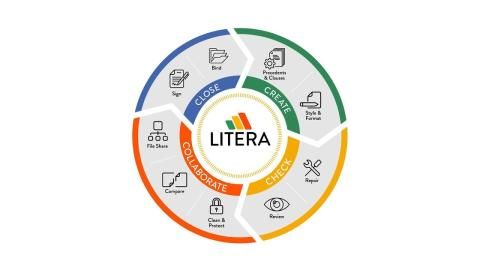
Litera is a legal technology platform designed to support document creation, document management, proofreading, comparison, collaboration, and workflow automation. It is widely used by law firms, legal departments, financial organizations, and other businesses that regularly handle document-intensive work. Instead of replacing legal professionals, the platform helps simplify repetitive tasks so they can focus more on analysis, decision-making, and client communication.
This guide explains what Litera is, how it works, its major features, practical applications, benefits, and the technology supporting modern legal document management.
What Is Litera?
Litera is a legal technology platform that provides software solutions for document management, document comparison, proofreading, collaboration, workflow organization, and legal drafting. It helps legal professionals work more efficiently with complex documents while maintaining consistency throughout the drafting process.
The platform combines several productivity tools into one environment, making document-related work easier to organize and review.
Litera is commonly used in:
Law firms
Corporate legal departments
Financial institutions
Consulting organizations
Government agencies
Educational institutions
Compliance teams
Business administration
Its tools support professionals who manage detailed written documents every day.
Why Litera Matters
Legal work often involves reviewing multiple document versions, checking formatting, comparing revisions, and maintaining consistent language. Completing these activities manually requires careful attention and significant time.
Litera helps organizations:
Organize document workflows
Improve document consistency
Compare multiple document versions
Simplify proofreading
Support team collaboration
Reduce repetitive editing tasks
These capabilities help legal teams work more efficiently while maintaining document quality.
How Litera Works
Although different modules support different tasks, the general workflow follows several common steps.
Document Creation
Users prepare legal documents using familiar word-processing software integrated with Litera tools.
Templates and formatting standards help maintain consistency.
Document Review
The platform reviews formatting, grammar, citations, numbering, and document structure.
Potential issues are highlighted for review.
Version Comparison
When multiple document versions exist, Litera compares them and identifies changes between the files.
This helps users review edits more efficiently.
Collaboration
Team members can review documents together while maintaining organized document versions.
Final Review
After revisions are complete, the document can undergo a final quality check before distribution or filing.
Main Features
Litera includes a variety of tools that support document preparation and management.
Document Comparison
One of the platform's widely recognized capabilities is comparing different versions of documents.
The software identifies additions, deletions, and formatting changes automatically.
Proofreading
Proofreading tools examine grammar, punctuation, formatting consistency, numbering, and citation accuracy.
This helps reduce common document errors.
Document Templates
Templates help maintain consistent formatting across legal documents.
Standardized layouts improve document organization.
Metadata Management
Metadata tools help identify hidden information that may remain inside document files.
Reviewing metadata supports better document management.
Collaboration
Multiple team members can participate in document preparation while maintaining organized workflows.
Common Applications
Litera supports many legal and business activities.
Contract Preparation
Legal teams prepare and review contracts while comparing revisions and maintaining consistent formatting.
Document Review
Complex legal documents often require multiple rounds of review before completion.
Comparison tools simplify this process.
Due Diligence
During mergers, acquisitions, and compliance reviews, professionals often analyze large document collections.
Document management tools help organize these materials.
Regulatory Documentation
Organizations preparing compliance documentation benefit from standardized templates and review tools.
Industries Using Litera
Although designed primarily for legal work, Litera supports several industries.
Legal Industry
Law firms use the platform for drafting, reviewing, comparing, and organizing legal documents.
Financial Organizations
Financial institutions manage contracts, regulatory records, and documentation using structured document workflows.
Corporate Legal Teams
Businesses with internal legal departments organize contracts and policy documents more efficiently.
Government Organizations
Government agencies often manage extensive documentation requiring careful review and version control.
Consulting Firms
Consultants preparing reports and legal documentation use document comparison and proofreading tools during project work.
Collaboration Features
Modern legal work often involves multiple contributors.
Litera supports collaboration through features such as:
Shared document review
Version tracking
Editing history
Standardized templates
Formatting consistency
Workflow organization
These capabilities help teams coordinate document preparation more effectively.
Integration With Other Software
Litera integrates with several commonly used workplace applications.
Examples include:
Microsoft Word
Microsoft Outlook
Microsoft Office applications
Document management platforms
Cloud storage systems
Collaboration software
These integrations allow users to continue working within familiar software environments.
Security and Document Management
Legal documents often contain confidential information, making secure document handling an important consideration.
Many organizations using legal technology implement:
User authentication
Access permissions
Secure document storage
Activity tracking
Version management
Data protection policies
These practices help maintain appropriate control over sensitive documents.
Litera Overview
| Feature | Primary Purpose |
|---|---|
| Document Comparison | Reviews document changes |
| Proofreading | Identifies writing issues |
| Templates | Maintains consistent formatting |
| Metadata Management | Reviews hidden document information |
| Collaboration | Supports team document editing |
| Workflow Organization | Simplifies document preparation |
Benefits of Legal Technology
Organizations use legal technology platforms for several practical reasons.
Common advantages include:
Better document organization
Improved collaboration
Faster document comparison
More consistent formatting
Simplified proofreading
Efficient version management
These improvements support organized legal documentation without replacing professional judgment.
Technology Trends
Legal technology continues advancing through digital innovation.
Recent developments include:
Artificial intelligence-assisted document review
Machine learning document analysis
Cloud-based collaboration
Automated document classification
Intelligent search capabilities
Digital workflow management
Predictive document analytics
These technologies help legal professionals manage growing volumes of documentation more efficiently.
Looking Ahead
As artificial intelligence and cloud computing continue evolving, legal technology platforms such as Litera are expected to include stronger automation, improved document analysis, enhanced collaboration, and more intelligent workflow management. Future developments may also improve document search capabilities and simplify legal research through advanced data analysis.
These innovations will continue supporting legal professionals while maintaining the importance of human expertise and careful legal review.
Why Understanding Litera Matters
Legal documents influence many aspects of everyday life, from business agreements and employment contracts to property records and compliance documentation. Technology that helps organize these documents supports greater efficiency and consistency across many industries.
Learning about Litera provides insight into how modern legal professionals use technology to manage complex documentation while maintaining accuracy and organized workflows.
Conclusion
Litera is an important legal technology platform that helps organizations manage document creation, comparison, proofreading, collaboration, and workflow organization. By combining document management tools with intelligent automation and productivity features, it supports efficient legal documentation across law firms, corporate legal departments, financial organizations, and government institutions. As legal technology continues advancing, Litera will remain an important part of modern document management and digital legal workflows.

Related Post...

Hapag-Lloyd Container Shipping Complete Guide to International Cargo Transportation
Updated: September 16, 2026
Read More
Industrial Machinery Manufacturing Essential Insights for Modern Production Systems
Updated: September 17, 2026
Read More
Void Labels Manufacturer Guide: Protecting Products with Tamper-Evident Solutions
Updated: September 19, 2026
Read More