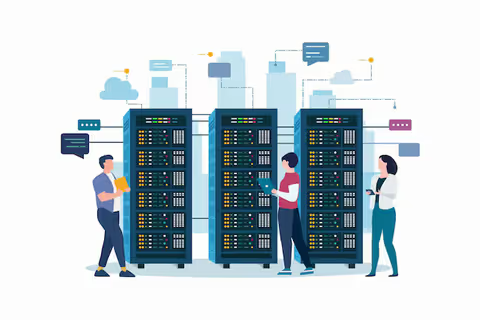
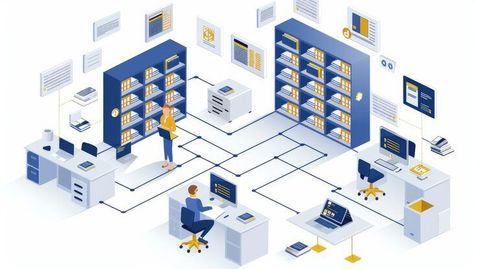
These dashboards exist because modern organizations generate large volumes of data from multiple sources such as sales systems, marketing platforms, finance software, supply chains, and customer service tools. Manually compiling and analyzing this information is time-consuming and prone to human error.
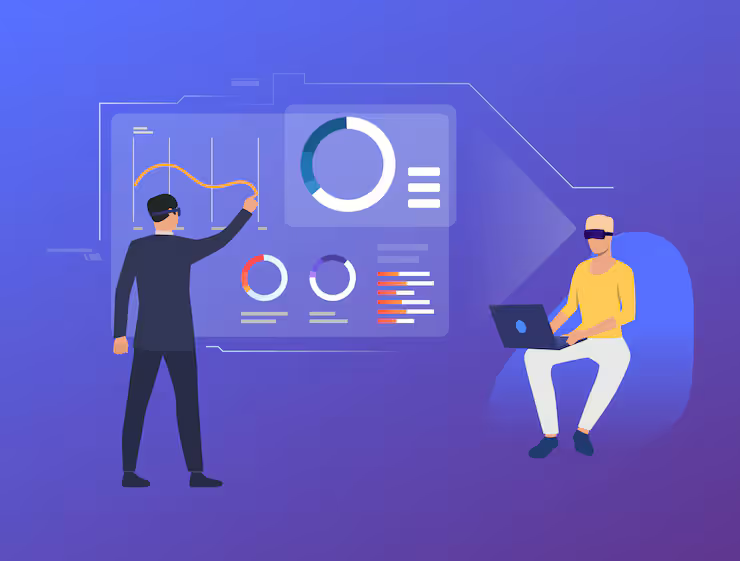
An AI powered dashboard typically combines:
-
Data integration from multiple systems
-
Automated data cleaning and validation
-
Predictive analytics models
-
Real-time visualization tools
-
Natural language summaries
Instead of only presenting static graphs, AI systems can highlight trends, flag unusual activity, and suggest possible explanations based on historical patterns.
The following comparison shows the difference between traditional dashboards and AI powered dashboards:
| Feature | Traditional Dashboard | AI Powered Dashboard |
|---|
| Data Updates | Manual or scheduled | Real-time or automated |
| Error Detection | Limited | Automated anomaly detection |
| Insights | Descriptive only | Predictive and prescriptive |
| Report Creation | Manual effort | Automated summaries |
| Data Sources | Often limited | Multiple integrated sources |
AI powered dashboards were developed to improve accuracy, reduce manual reporting workload, and support data-driven decision-making.
Importance: Why AI Powered Dashboards Matter Today
Organizations today operate in fast-changing markets where decisions must be made quickly and based on reliable information. Inaccurate or delayed reports can affect budgeting, forecasting, compliance, and operational planning.
AI powered dashboards matter because they help:
-
Reduce data entry errors
-
Improve consistency across reports
-
Save time in report preparation
-
Provide predictive insights
-
Enhance transparency in decision-making
These tools are relevant to:
Business Managers
They rely on dashboards to monitor revenue, expenses, and performance indicators.
Finance Teams
Accurate financial data is essential for compliance, audits, and tax reporting.
Marketing Departments
Campaign performance metrics and customer analytics require real-time tracking.
Operations and Supply Chain Teams
Inventory levels, delivery timelines, and production data must be continuously monitored.
Healthcare and Government Agencies
Large datasets require accurate reporting to maintain accountability and service efficiency.
The following table outlines common reporting challenges and AI-driven solutions:
| Reporting Challenge | AI Dashboard Solution |
|---|
| Inconsistent data across departments | Automated data integration |
| Human calculation errors | AI-based validation checks |
| Delayed reporting cycles | Real-time data refresh |
| Difficulty identifying trends | Predictive analytics models |
| Complex datasets | Simplified visual summaries |
Another key benefit is reporting efficiency. Automated dashboards can generate weekly, monthly, or quarterly reports without manual compilation. Natural language generation features can summarize insights in simple sentences, making reports accessible to non-technical stakeholders.
By improving both speed and reliability, AI dashboards support informed planning and risk management.
Recent Updates and Industry Trends
AI dashboard technology has advanced significantly over the past year.
In early 2025, many analytics platforms expanded generative AI capabilities. These features allow users to ask questions in plain language, such as “What were last quarter’s top-performing products?” and receive visual and written responses instantly.
Integration with cloud data warehouses has also improved. During 2024 and 2025, major software providers enhanced compatibility with cloud platforms to enable seamless data flow across systems.
Another trend is embedded analytics. Businesses are increasingly integrating AI dashboards directly into enterprise applications such as CRM, ERP, and HR management systems.
Automation of compliance reporting has grown as well. In 2025, organizations in finance and healthcare sectors began using AI dashboards to monitor regulatory metrics in real time.
A simplified overview of recent trends is presented below:
| Trend | Description | Status in 2025 |
|---|
| Generative AI Reporting | Natural language query and summaries | Rapid adoption |
| Cloud Integration | Seamless multi-source data access | Widely implemented |
| Embedded Analytics | Dashboards within business apps | Increasing |
| Predictive Forecasting | AI-based projections | Expanding |
| Compliance Monitoring | Automated regulatory reporting | Growing demand |
These developments reflect the increasing reliance on AI to manage complex and high-volume datasets efficiently.
Laws and Policies Affecting AI Powered Dashboards
AI powered dashboards operate within data protection, cybersecurity, and regulatory compliance frameworks.
Data Protection Regulations
Since dashboards process large amounts of organizational and customer data, they must comply with data privacy laws. In India, the Digital Personal Data Protection Act, 2023, regulates how personal data is collected, processed, and stored. Organizations using AI dashboards must ensure secure data handling and lawful processing.
International Compliance
Businesses operating globally may need to comply with regulations such as the General Data Protection Regulation (GDPR) in the European Union or other regional data laws.
Financial Reporting Standards
Companies must ensure that automated financial dashboards align with accounting standards and audit requirements.
AI Governance Guidelines
In 2024 and 2025, governments and regulatory bodies introduced discussions and draft frameworks on responsible AI usage. These frameworks emphasize transparency, fairness, and accountability in automated decision systems.
Cybersecurity Requirements
Data encryption, secure authentication, and access controls are necessary to protect dashboard systems from unauthorized access.
Before implementing AI powered dashboards, organizations should verify:
-
Data security configurations
-
Compliance with privacy regulations
-
Accuracy of AI-generated insights
-
Internal audit compatibility
Legal compliance ensures trust and reliability in automated reporting systems.
Tools and Resources for AI Powered Dashboard Implementation
Several tools and platforms support AI-driven dashboard development and reporting.
Business Intelligence Platforms
-
Microsoft Power BI
-
Tableau
-
Google Looker Studio
-
Qlik Sense
Cloud Data Warehouses
-
Google BigQuery
-
Amazon Redshift
-
Snowflake
AI and Analytics Tools
-
Python with machine learning libraries
-
R programming for statistical analysis
-
Automated anomaly detection systems
Data Preparation Tools
Project Management and Collaboration Tools
-
Jira
-
Asana
-
Microsoft Teams
The table below summarizes resource categories:
| Category | Purpose |
|---|
| BI Platforms | Visualize and analyze data |
| Cloud Storage | Store large datasets securely |
| AI Libraries | Build predictive models |
| ETL Tools | Prepare and integrate data |
| Collaboration Apps | Share insights across teams |
Selecting appropriate tools depends on organizational size, data volume, compliance requirements, and reporting complexity.
FAQs About AI Powered Dashboards
What makes a dashboard AI powered?
An AI powered dashboard uses machine learning, automated data processing, or predictive analytics to generate insights beyond simple visualizations.
Do AI dashboards eliminate the need for human analysts?
No. They support analysts by automating repetitive tasks and highlighting patterns, but human interpretation and decision-making remain important.
Are AI powered dashboards secure?
Security depends on implementation. Most modern systems include encryption, role-based access controls, and compliance with data protection standards.
Can small businesses use AI dashboards?
Yes. Many cloud-based platforms offer scalable solutions suitable for small and medium-sized businesses.
How do AI dashboards improve reporting efficiency?
They automate data integration, clean datasets, generate visualizations, and produce summaries, reducing manual workload and reporting time.
Final Thoughts
AI powered dashboards represent an evolution in business intelligence and reporting systems. By combining automation, predictive analytics, and real-time visualization, they improve both data accuracy and reporting efficiency.
Recent advancements in generative AI, cloud integration, and compliance monitoring have expanded their capabilities. At the same time, organizations must ensure adherence to data protection laws and responsible AI guidelines.
When implemented thoughtfully, AI powered dashboards can enhance transparency, support informed decision-making, and reduce operational inefficiencies. They serve as practical tools for managing complex datasets in a rapidly evolving digital environment.