Industrial Freeze Dryer Complete Guide to Modern Drying Technology
Industrial drying technologies play an essential role in preserving product quality, extending storage stability, and maintaining the physical characteristics of temperature-sensitive materials.
An Industrial Freeze Dryer is a specialized processing system that removes moisture through sublimation, allowing products to retain much of their original structure, appearance, and nutritional or chemical properties. This technology is widely used across the food, pharmaceutical, biotechnology, and research industries.
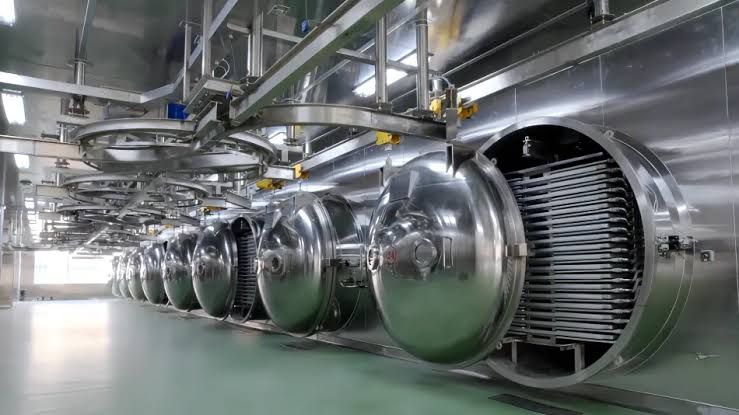
Modern Industrial Freeze Dryers combine precision temperature control, vacuum technology, automated monitoring, and digital process management to deliver consistent drying performance. By carefully controlling each stage of the freeze-drying cycle, manufacturers can process a wide variety of products while maintaining quality and production efficiency.
This guide explains Industrial Freeze Dryers, their working principles, major components, applications, maintenance practices, safety considerations, and the latest innovations in freeze-drying technology.
What Is an Industrial Freeze Dryer?
An Industrial Freeze Dryer is industrial equipment designed to remove water from frozen materials through a process known as lyophilization. Instead of melting into liquid, the frozen water changes directly into vapor under controlled vacuum conditions, helping preserve the product's structure and composition.
Industrial freeze dryers are commonly used for processing:
Fruits and vegetables
Coffee
Dairy ingredients
Prepared meals
Herbs and spices
Pharmaceutical products
Biological materials
Laboratory samples
Nutritional ingredients
Specialty chemicals
The specific drying cycle depends on the product's characteristics and processing requirements.
Why Industrial Freeze Dryers Matter
Freeze drying provides several advantages for sensitive products.
Industrial Freeze Dryers help:
Preserve product quality
Extend storage life
Maintain product structure
Reduce moisture content efficiently
Improve product stability
Support long-term storage
These benefits make freeze drying suitable for products that require careful moisture removal.
How an Industrial Freeze Dryer Works
The freeze-drying process follows several carefully controlled stages.
Product Freezing
Products are frozen to convert moisture into solid ice while maintaining structural integrity.
Vacuum Generation
The drying chamber is placed under a controlled vacuum to prepare for sublimation.
Primary Drying
Heat is applied gradually, allowing frozen moisture to sublimate directly into water vapor.
Secondary Drying
Additional moisture is removed to achieve the desired final moisture level.
Product Packaging
After drying, products are packaged under suitable conditions to help maintain quality during storage.
Main Components
Modern Industrial Freeze Dryers include several integrated systems.
Key components include:
Drying chamber
Vacuum pump
Refrigeration system
Condenser
Heating shelves
Control system
Temperature sensors
Pressure sensors
Product trays
Data monitoring system
Each component contributes to efficient and controlled drying operations.
Applications Across Industries
Industrial Freeze Dryers support a wide range of manufacturing sectors.
Food Processing
Freeze drying helps preserve fruits, vegetables, coffee, herbs, dairy ingredients, and ready-to-eat foods while maintaining flavor, texture, and nutritional value.
Pharmaceutical Manufacturing
Many pharmaceutical products require controlled drying to improve long-term stability and storage.
Biotechnology
Biological materials and laboratory samples often undergo freeze drying for preservation and transportation.
Chemical Industry
Specialty chemicals and research materials may be processed using lyophilization techniques.
Research Laboratories
Research institutions use freeze dryers to preserve experimental samples and sensitive materials.
Technologies Supporting Modern Freeze Drying
Today's Industrial Freeze Dryers increasingly incorporate advanced technologies.
Examples include:
Industrial Internet of Things (IIoT)
Automated process control
Smart temperature monitoring
Vacuum pressure management
Predictive maintenance software
Digital batch recording
Remote equipment monitoring
Energy optimization systems
These technologies improve process consistency while supporting production efficiency.
Industrial Freeze Dryer Overview
| Process Stage | Primary Purpose |
|---|---|
| Product Freezing | Freeze moisture within the product |
| Vacuum Generation | Create sublimation conditions |
| Primary Drying | Remove frozen moisture |
| Secondary Drying | Reduce remaining moisture |
| Packaging | Protect product quality |
| Monitoring | Track process performance |
Quality Control
Quality assurance is essential during freeze drying.
Inspection activities commonly include:
Moisture content analysis
Temperature monitoring
Vacuum pressure verification
Product appearance inspection
Batch documentation
Equipment performance evaluation
These procedures help maintain consistent product quality.
Maintenance Considerations
Routine maintenance supports dependable freeze dryer performance.
Typical maintenance includes:
Cleaning the drying chamber
Inspecting vacuum pumps
Checking refrigeration systems
Calibrating sensors
Monitoring condenser performance
Reviewing maintenance records
Preventive maintenance helps improve equipment reliability and reduce production interruptions.
Safety Considerations
Industrial Freeze Dryers operate with low temperatures, vacuum systems, and electrical equipment.
Important safety practices include:
Follow operating procedures.
Inspect vacuum systems regularly.
Monitor refrigeration equipment.
Use suitable protective equipment.
Verify sensor calibration.
Perform routine safety inspections.
These practices contribute to safe and reliable operation.
Environmental Considerations
Modern freeze-drying facilities increasingly focus on sustainability.
Common initiatives include:
Energy-efficient refrigeration systems
Heat recovery technologies
Reduced water consumption
Smart energy management
Refrigerant optimization
Digital process monitoring
These approaches support environmentally responsible manufacturing.
Current Industry Trends
Freeze-drying technology continues advancing through innovation.
Recent developments include:
Artificial intelligence-assisted process optimization
Smart factory integration
Advanced automation
Digital production monitoring
High-efficiency vacuum systems
Connected manufacturing platforms
Real-time process analytics
These developments continue improving drying efficiency and product consistency.
Looking Ahead
Future Industrial Freeze Dryers are expected to feature greater automation, enhanced artificial intelligence, improved energy efficiency, and deeper integration with Industry 4.0 technologies. Advances in digital process control, predictive maintenance, and sustainable refrigeration systems will continue to improve productivity while reducing resource consumption.
Why Understanding Industrial Freeze Dryers Matters
Learning about an Industrial Freeze Dryer provides valuable insight into one of the most advanced drying technologies used in food processing, pharmaceuticals, biotechnology, and research. Understanding freeze-drying principles, equipment components, maintenance practices, and emerging technologies helps explain how manufacturers preserve product quality while improving operational efficiency.
Conclusion
An Industrial Freeze Dryer is an essential part of modern manufacturing, enabling precise moisture removal while preserving the quality and stability of temperature-sensitive products. Through controlled freezing, vacuum technology, intelligent monitoring, and preventive maintenance, freeze dryers support reliable production across multiple industries. As automation and sustainable processing technologies continue to evolve, Industrial Freeze Dryers will remain a key component of advanced industrial drying systems.

Related Post...


Void Labels Manufacturer Guide: Protecting Products with Tamper-Evident Solutions
Updated: October 19, 2026
Read More
Security Commercial Door Beginner Guide to Choosing Reliable Building Security Features
Updated: October 15, 2026
Read More