Practical Insights into Co Working Spaces for Startups and Freelancers
Co working spaces are shared work environments where individuals and businesses rent desks, cabins, or meeting rooms instead of maintaining a traditional office. These spaces are designed to provide essential infrastructure such as high-speed internet, office furniture, utilities, and common facilities in a flexible format.
The concept developed as a response to changing work patterns. Startups, remote workers, and freelancers often need professional environments without the long-term commitment and high cost of leasing a conventional office. As digital businesses and remote work models expanded globally, especially after 2020, demand for flexible office arrangements increased significantly.
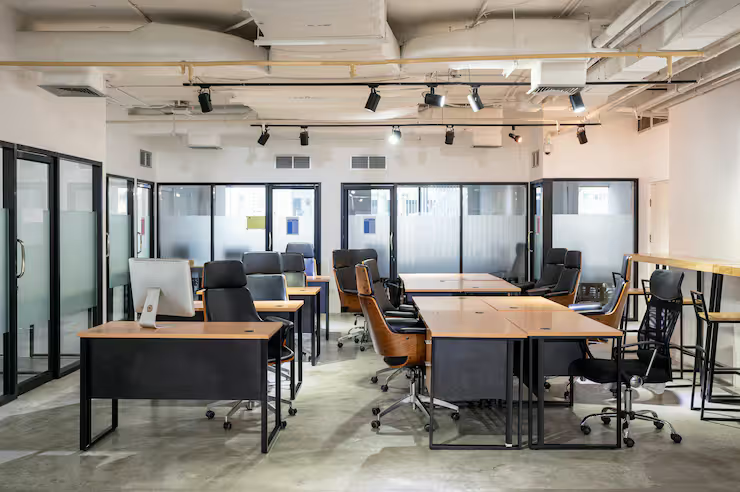
Unlike traditional offices, co working spaces operate on flexible membership models. Users can choose daily passes, monthly memberships, or dedicated private cabins. This structure allows individuals and small businesses to scale their workspace according to changing needs.
A simple comparison between traditional offices and co working spaces is shown below:
| Feature | Traditional Office | Co Working Space |
|---|---|---|
| Lease Duration | Long-term (3–9 years) | Flexible (daily/monthly) |
| Setup Cost | High upfront investment | Minimal initial cost |
| Maintenance | Managed by tenant | Managed by provider |
| Networking | Limited to company staff | Shared community environment |
| Scalability | Complex and costly | Easy to expand or reduce |
Co working spaces exist to provide flexibility, affordability, and collaboration opportunities in modern work ecosystems.
Importance: Why Co Working Spaces Matter Today
Co working spaces play an important role in supporting startups, freelancers, remote employees, consultants, and small businesses. They address several practical challenges faced by independent professionals and early-stage companies.
One key benefit is cost efficiency. Renting a private office often requires security deposits, furnishing costs, maintenance staff, and long-term contracts. For startups operating with limited capital, this can create financial strain. Co working spaces reduce this burden by offering ready-to-use infrastructure.
Another major advantage is flexibility. Business teams can expand or reduce space depending on hiring trends, project cycles, or funding stages. This adaptability is particularly helpful in fast-changing industries such as technology, digital marketing, design, and consulting.
Co working spaces also help solve professional isolation. Freelancers working from home may experience limited interaction and networking opportunities. Shared workspaces create environments where professionals from different industries interact, exchange ideas, and collaborate.
The impact of co working spaces can be summarized in the following chart representation:
Startup Needs vs. Co Working Solutions
Startup Need → Affordable workspace → Flexible contracts → Networking opportunities → Professional meeting rooms → Administrative support
Co Working Solution → Shared infrastructure → Short-term plans → Community events → Bookable conference rooms → Front desk and facility management
These spaces also influence urban development. Many cities now include co working hubs in commercial zones to support entrepreneurship and small business growth.
Recent Updates and Industry Trends
The co working industry has experienced noticeable changes over the past year.
In 2025, several global and regional operators expanded into Tier 2 and Tier 3 cities in countries like India, the United States, and the United Kingdom. This expansion reflects growing demand beyond major metropolitan areas.
Hybrid work remains a strong trend. According to industry reports released in early 2025, companies are increasingly adopting a hybrid model where employees split time between home and shared office spaces. This shift has encouraged enterprises to purchase team memberships in co working facilities rather than maintaining large permanent offices.
Technology integration has also improved. Many providers now offer:
-
App-based booking systems
-
Digital access control
-
Smart meeting room scheduling
-
Usage-based billing
Sustainability has become another focus area. Several new co working facilities launched in 2024 and 2025 emphasize energy-efficient lighting, eco-friendly materials, and waste reduction policies.
A simplified trend overview is presented below:
| Trend | Description | Observed Growth |
|---|---|---|
| Hybrid Workspaces | Flexible work arrangements | Increasing in 2025 |
| Tier 2 City Expansion | Growth beyond metro cities | Significant |
| Tech-Enabled Access | App-based operations | Widely adopted |
| Sustainable Design | Green-certified buildings | Growing demand |
These updates demonstrate how the industry continues to adapt to evolving workforce expectations.
Laws and Policies Affecting Co Working Spaces
Co working spaces operate within existing commercial property and business regulations. While laws differ by country, several common regulatory areas apply.
Commercial Leasing Regulations
Co working providers typically lease commercial properties and sub-license desks or offices to members. These agreements must comply with local real estate and tenancy laws.
Business Registration and Taxation
Startups and freelancers using co working addresses for business registration must follow local company formation rules. In India, for example, businesses can register a company using a co working address if proper documentation and no-objection certificates are provided.
Goods and Services Tax (GST) or Sales Tax
Membership fees are generally subject to applicable taxes. Operators must comply with tax filing requirements and invoicing regulations.
Safety and Compliance Standards
Buildings must meet fire safety norms, accessibility guidelines, and municipal building codes. Government inspections may apply.
Government Support Programs
In some countries, entrepreneurship development schemes encourage startup growth. For example:
-
Startup India initiatives
-
MSME registration benefits
-
Local innovation grants
-
Digital India programs
These policies indirectly support demand for flexible workspaces by encouraging new business formation.
Professionals should verify compliance requirements when using co working addresses for legal documentation or tax registration.
Tools and Resources for Co Working Users
Several tools and platforms help individuals and businesses maximize the value of co working spaces.
Workspace Discovery Platforms
-
Coworker.com
-
WeWork website
-
Regus office locator
-
Google Maps business listings
Cost Comparison Tools
-
Online office space calculators
-
Rent comparison spreadsheets
-
Budget planning templates
Productivity Tools
-
Trello or Asana for project management
-
Slack or Microsoft Teams for communication
-
Google Workspace for collaboration
Booking and Access Apps
Many providers offer internal mobile apps for:
-
Desk reservations
-
Meeting room booking
-
Visitor entry management
Financial and Legal Tools
-
GST calculators
-
Business registration portals
-
Contract templates for freelancers
The following simplified table highlights categories of tools:
| Category | Purpose |
|---|---|
| Workspace Platforms | Find and compare spaces |
| Budget Calculators | Estimate monthly costs |
| Productivity Apps | Manage work tasks |
| Legal Portals | Register businesses |
| Collaboration Software | Coordinate teams |
Using these tools can help startups and freelancers make informed decisions about workspace selection and management.
FAQs About Co Working Spaces
What is the difference between hot desks and dedicated desks?
Hot desks are flexible seats that can be used by any member on a first-come basis. Dedicated desks are reserved for a specific individual and remain assigned to them.
Can a startup register its company using a co working address?
In many countries, yes. However, the provider must offer proper documentation such as a no-objection certificate and address proof. Local regulations should be checked before registration.
Are co working spaces suitable for long-term use?
They can be suitable depending on business needs. Some companies use them temporarily during early growth stages, while others maintain long-term memberships for flexibility.
How secure are co working environments?
Most professional spaces include CCTV monitoring, access cards, reception management, and secure internet networks. However, users should still follow best practices for data protection.
Do co working spaces provide meeting rooms?
Yes. Most providers offer bookable meeting rooms and conference facilities, often included in membership plans or available at additional cost.
Final Thoughts
Co working spaces have evolved into structured, professionally managed environments that support modern work models. For startups and freelancers, they offer flexible infrastructure, cost efficiency, and access to collaborative communities.
The growing adoption of hybrid work arrangements, digital management systems, and expansion into emerging cities reflects broader workplace transformation. While co working spaces provide practical benefits, users should evaluate legal requirements, cost structures, and operational needs before selecting a membership plan.

You may also like...

Practical Insights into Co Working Spaces for Startups and Freelancers
Last Update: March 02, 2026
Read
Learn How Different Warehousing Options Support Effective Supply Chain Management
Last Update: March 16, 2026
Read