Everything You Need to Know About Screw in Teeth for Better Oral Health
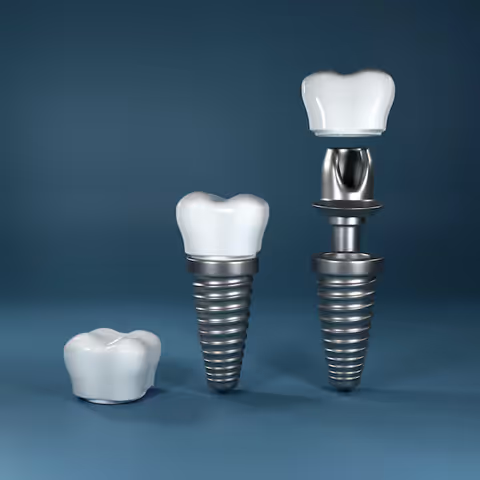
Screw in teeth is a commonly used term for dental implants, a modern dental treatment used to replace missing teeth. A dental implant is a small titanium post that is surgically placed into the jawbone to act as an artificial tooth root. Once the implant integrates with the bone, a crown or artificial tooth is attached on top.
Dental implants were developed to provide a stable and long-lasting solution for tooth loss. Traditional tooth replacement options such as removable dentures or dental bridges can restore appearance and function, but they may not always provide the same level of stability or support for the jawbone.
A screw in tooth works by mimicking the natural structure of a tooth. The implant acts as the root, while the crown functions as the visible portion of the tooth.
A typical dental implant system consists of three parts:
-
Implant post inserted into the jawbone
-
Abutment that connects the implant to the crown
-
Dental crown that replaces the visible tooth
The following table explains the components of a screw in tooth system.
| Component | Purpose |
|---|---|
| Implant Post | Serves as an artificial tooth root |
| Abutment | Connects the implant to the crown |
| Dental Crown | Replaces the visible tooth surface |
Dental implants exist because tooth loss can affect chewing ability, speech, facial structure, and oral health. By replacing the missing root and tooth, implants aim to restore both function and appearance.
Importance: Why Screw in Teeth Are Relevant Today
Tooth loss is a common dental issue that can occur due to decay, gum disease, injury, or aging. When a tooth is lost, the surrounding bone and teeth may gradually shift or weaken.
Screw in teeth are important because they provide a replacement that closely resembles the structure and function of natural teeth. Unlike removable dentures, implants are fixed into the jawbone, which helps maintain stability.
Dental implants address several challenges associated with missing teeth.
Restoring Chewing Function
Implants allow individuals to chew food more comfortably compared with some removable dental solutions.
Maintaining Jawbone Structure
When a tooth root is missing, the jawbone may gradually shrink. An implant can help stimulate the bone and reduce this loss.
Supporting Adjacent Teeth
Dental bridges may rely on neighboring teeth for support. Implants replace the missing tooth independently without affecting nearby teeth.
Improving Speech and Comfort
Fixed implants often reduce the risk of slipping or movement associated with removable dentures.
The following table compares common tooth replacement methods.
| Feature | Dental Implants | Dentures | Dental Bridges |
|---|---|---|---|
| Stability | Fixed in bone | Removable | Fixed but supported by adjacent teeth |
| Bone Support | Helps maintain jawbone | Limited bone stimulation | Limited |
| Maintenance | Similar to natural teeth care | Requires removal for cleaning | Regular dental hygiene required |
| Longevity | Long-term solution with proper care | May need periodic replacement | Moderate lifespan |
Dental implants can benefit adults who have lost one or more teeth and have sufficient jawbone structure to support the implant.
Recent Updates and Trends in Dental Implant Technology
Dental implant technology has advanced significantly in recent years. New techniques and materials continue to improve treatment planning and outcomes.
In 2024 and early 2025, digital dentistry technologies gained wider adoption. Dentists increasingly use 3D imaging and digital scanning to plan implant placement more precisely.
Computer-guided implant surgery is another growing trend. This technique uses digital models and surgical guides to assist dentists during implant procedures.
Advancements in implant materials have also been observed. Titanium remains widely used, but research continues into alternative materials and surface treatments that may support faster bone integration.
Another development involves minimally invasive procedures. Improved surgical tools and imaging methods allow some implant placements to be completed with smaller incisions and shorter recovery periods.
The following table highlights recent developments.
| Trend | Description | Status |
|---|---|---|
| Digital Implant Planning | 3D imaging and scanning for precise placement | Increasing adoption |
| Computer-Guided Surgery | Digital guides used during procedures | Expanding use |
| Improved Implant Surfaces | Materials designed for better bone integration | Ongoing research |
| Minimally Invasive Techniques | Smaller incisions and faster recovery | Growing trend |
| Same-Day Implants | Immediate temporary crowns in some cases | Limited but increasing |
These innovations aim to improve accuracy, patient comfort, and long-term stability of dental implants.
Laws and Policies Related to Dental Implant Procedures
Dental implant treatments are regulated under healthcare and dental practice laws. These regulations ensure that procedures are performed safely and by qualified professionals.
Dental Licensing Regulations
Dentists performing implant procedures must hold valid professional licenses issued by national or regional dental councils or regulatory bodies.
Clinical Safety Standards
Dental clinics must follow infection control guidelines, sterilization standards, and patient safety protocols.
Medical Device Regulations
Dental implant materials and surgical instruments must comply with medical device approval processes before being used in clinical practice.
Healthcare Transparency Guidelines
In many regions, dental clinics must provide patients with clear information about procedures, costs, risks, and expected outcomes.
Insurance and Healthcare Policies
Dental implant coverage varies depending on healthcare systems and insurance policies. Some insurance plans partially cover implant procedures, while others classify them as specialized treatments.
Dental regulations often include requirements related to:
-
Patient consent and treatment planning
-
Sterilization and clinic hygiene
-
Qualified dental professionals performing procedures
-
Documentation and medical records
These policies aim to ensure patient safety and ethical dental care practices.
Tools and Resources for Dental Implant Patients
Several tools and resources help individuals understand and prepare for dental implant procedures.
Dental Consultation Services
-
Professional dental examinations
-
Implant treatment planning consultations
-
Oral health evaluations
Diagnostic Tools
-
Dental X-rays
-
3D cone beam CT scans
-
Digital dental scans
Oral Care Products
-
Soft-bristled toothbrushes
-
Interdental brushes
-
Antibacterial mouth rinses
Educational Resources
-
Dental association websites
-
Oral health awareness programs
-
Patient education materials provided by dental clinics
Digital Health Tools
-
Appointment reminder applications
-
Oral hygiene tracking apps
-
Dental health information platforms
The following table summarizes useful resources.
| Resource Category | Purpose |
|---|---|
| Dental Consultations | Evaluate suitability for implants |
| Diagnostic Imaging | Plan implant placement |
| Oral Care Tools | Maintain implant hygiene |
| Educational Resources | Learn about dental procedures |
| Digital Health Apps | Manage dental appointments |
These resources support informed decision-making and ongoing oral care.
FAQs About Screw in Teeth
What are screw in teeth?
Screw in teeth refer to dental implants, which are artificial tooth roots placed into the jawbone to support replacement teeth.
Are dental implants permanent?
Dental implants are designed to be long-lasting. With proper oral hygiene and regular dental checkups, they may function effectively for many years.
Is the implant procedure painful?
Dental implant procedures are typically performed using local anesthesia. Patients may experience mild discomfort during the healing process, which varies among individuals.
Who is a candidate for dental implants?
Candidates generally include adults with missing teeth, healthy gums, and sufficient jawbone structure to support the implant. A dental professional can evaluate individual suitability.
How long does the implant process take?
The process may take several months, including healing time for the implant to integrate with the bone before placing the final crown.
Final Thoughts
Screw in teeth, commonly known as dental implants, represent a modern approach to replacing missing teeth. By replicating the function of natural tooth roots, implants can help restore chewing ability, support jawbone health, and improve oral stability.
Recent advancements in digital dentistry, imaging technology, and surgical techniques continue to improve implant procedures and treatment planning. At the same time, healthcare regulations and clinical safety standards ensure that implant treatments are performed responsibly.
Disclaimer: The information provided in this article is for informational purposes only. We do not make any claims or guarantees regarding the accuracy, reliability, or completeness of the information presented. The content is not intended as professional advice and should not be relied upon as such. Readers are encouraged to conduct their own research and consult with appropriate professionals before making any decisions based on the information provided in this article.

You may also like...

Everything You Need to Know About Screw in Teeth for Better Oral Health
Last Update: March 05, 2026
Read
A Complete Guide to Understanding Affordable Health Insurance and Coverage Options
Last Update: March 16, 2026
Read